







Popular Now
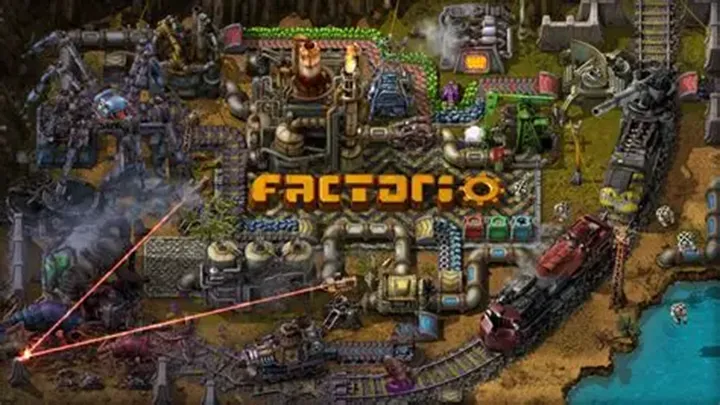
How to Play Factorio Effectively and Build a Fully Automated Factory
1.Understand That Automation Is the Core Goal
Factorio is not about manual production.
Hand-crafting is only temporary
Every task should become automated
Time is the most valuable resource
Manual work limits long-term scale
Automation defines progress
If you are crafting by hand, you are falling behind.
2.Plan Your Factory Layout Before Expanding
Chaos reduces efficiency.
Leave space between production lines
Build in straight, expandable rows
Avoid tight and permanent layouts early
Plan for future upgrades
Think in terms of scale, not speed
A clean layout saves hours later.
3.Master Conveyor Belt Logic and Flow
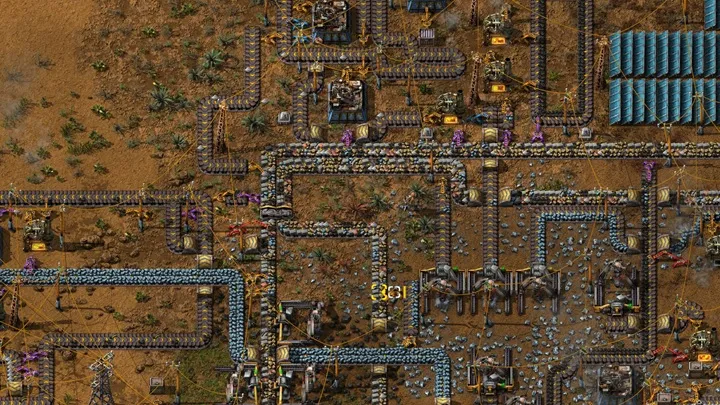
Belts are the factory’s bloodstream.
Balance input and output rates
Avoid belt congestion
Use splitters and underground belts properly
Keep materials flowing in one direction
Separate lanes for different items
Good belt logic prevents bottlenecks.
4.Use Ratios Instead of Guesswork
Efficiency comes from math.
Match machine output to input demand
Avoid overbuilding unnecessary assemblers
Learn basic production ratios
Upgrade machines gradually
Fix bottlenecks instead of adding more machines
Correct ratios create stable production.
5.Research Continuously and With Purpose
Technology drives expansion.
Keep research running at all times
Prioritize automation and logistics tech
Unlock faster belts and inserters early
Delay unnecessary military tech
Plan research based on current needs
Idle labs mean wasted potential.
6.Scale Power Production Carefully
Power failures stop everything.
Monitor power usage constantly
Expand power before shortages occur
Transition from steam to solar when ready
Separate power grids if needed
Avoid overloading a single source
Stable power keeps the factory alive.
7.Defend the Factory Proactively
Enemies punish slow reactions.
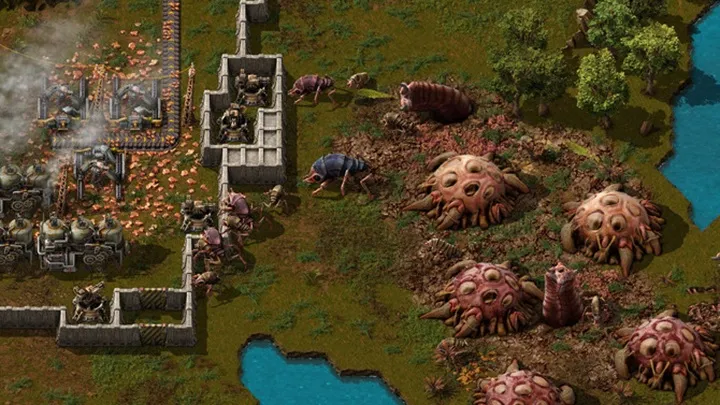
Pollution attracts biters
Defend borders, not individual buildings
Automate ammo and defenses
Upgrade walls and turrets gradually
Clear nests before they grow
Defense is easier than recovery.
8.Train Systems and Logistic Robots Properly
Advanced logistics reduce complexity.
Use trains for long-distance transport
Keep rail systems organized and signaled
Use robots for low-volume, complex tasks
Avoid using robots for everything
Combine belts, trains, and bots intelligently
Each system has a specific role.
9.Expand Step by Step, Not All at Once
Controlled growth prevents collapse.
Expand one system at a time
Test stability before scaling
Fix inefficiencies immediately
Avoid building faster than resources allow
Let the factory stabilize between expansions
Slow expansion creates long-term stability.
10.Accept Iteration and Continuous Improvement
Perfection is built through revision.
Tear down inefficient sections
Rebuild with better designs
Learn from failed layouts
Don’t fear restarting parts of the factory
Optimization never truly ends
Iteration is the real endgame.
Final Thoughts
Factorio is a game about logic, planning, and relentless optimization. By focusing on automation, clean layouts, proper ratios, stable power, and gradual expansion, players can transform chaotic beginnings into a perfectly synchronized industrial machine.
In Factorio, success is not measured by speed—but by how little you need to touch the factory yourself.